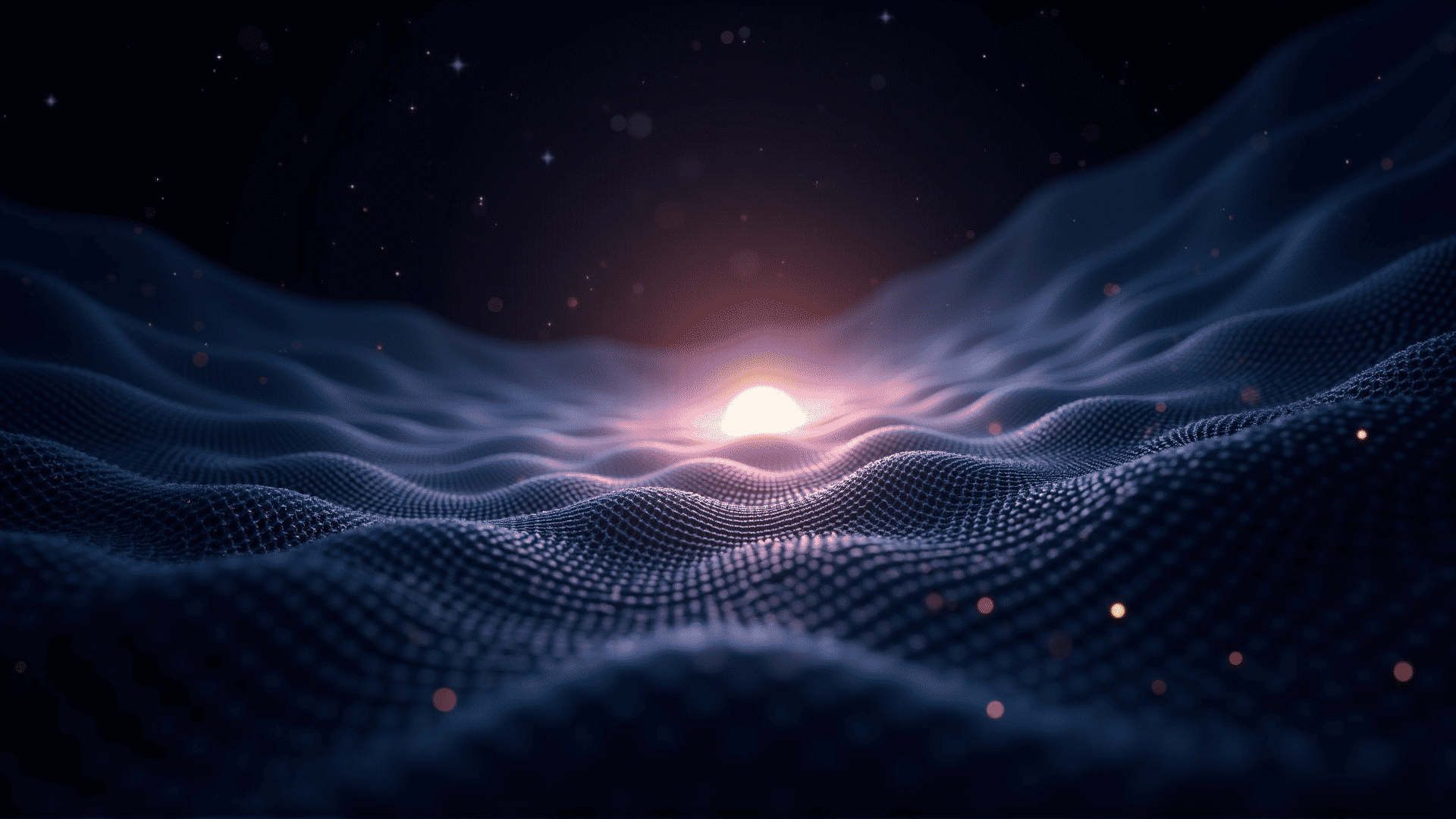
In the quest to unravel the mysteries of the cosmos, recent breakthroughs in our understanding of space-time have pushed the boundaries of what we know about the universe's fabric. These developments, spanning theoretical physics, astronomical observations, and technological innovations, provide a deeper understanding of the intricate tapestry that binds the cosmos.
At the heart of these advances is the concept of space-time, the four-dimensional continuum merging space and time into a single entity. This framework, first postulated by Albert Einstein in his theory of general relativity, remains pivotal, fundamentally altering our perception of gravity and the universe's structure. Recent studies have further illuminated how space-time interacts with the often enigmatic forces and phenomena beyond our everyday comprehension.
A notable area of progress involves gravitational waves—ripples in space-time caused by the acceleration of massive objects. Since their first direct detection in 2015 by the LIGO and Virgo observatories, these waves have become a profound tool for probing cosmic events. Recent observations have unveiled collisions between black holes and neutron stars, offering glimpses into phenomena that were once theoretical. Each detection not only confirms Einstein's predictions but also reveals more about the extreme conditions of the universe's most massive objects.
Parallel to advancements in gravitational wave astronomy, cutting-edge research has explored the interplay of quantum mechanics and space-time. Quantum field theory, when married with the principles of general relativity, suggests that space-time might not be a smooth continuum but rather composed of discrete units at the Planck scale. This notion redefines our understanding of the universe's structure, indicating a potential path toward reconciling the apparent contradictions between quantum mechanics and the theory of gravity.
Moreover, astrophysical discoveries continue to stir excitement in the scientific community. Observations of cosmic phenomena such as black hole shadows, mapped by the Event Horizon Telescope, and the expansion rate of the universe, refined through the study of distant supernovae and the cosmic microwave background, help refine our models of space-time. These insights also provoke further questions about dark matter and dark energy, two elusive components that dominate the universe's mass-energy content yet remain largely undetected.
Advancements in technology are equally crucial in these breakthroughs. The development of ever more sensitive instruments and telescopes, along with powerful computational models, enable scientists to simulate and visualize complex space-time interactions with unprecedented clarity. These tools offer a closer look at cosmic events, refining theoretical predictions and corroborating observational data.
Recent developments in our understanding of black holes lend credence to the idea that space-time could possess hidden dimensions, potentially explaining the persistent mysteries surrounding gravity's behavior at quantum levels. This hypothesis, explored through string theory and related frameworks, posits that adding dimensions beyond space-time's observable four could resolve long-standing discrepancies in theoretical physics.
As we delve deeper into the cosmos, the emerging picture of space-time is one of dynamic complexity, filled with ever-unfolding layers of reality. Each discovery fuels the imagination, inspiring new questions about the universe's origins, its ultimate fate, and our place within it. Through these breakthroughs, humanity edges closer to a more comprehensive understanding of the cosmos's intricate fabric, revealing a universe rich with mystery and wonder yet to be fully explored.